Pages

Saturday, April 11, 2015

Love radical books and ideas? Support AK Press!


DONATE HERE: http://www.gofundme.com/akpressfire 
BUY A HALF-PRICE eBOOK: http://www.akpress.org/downloads.html

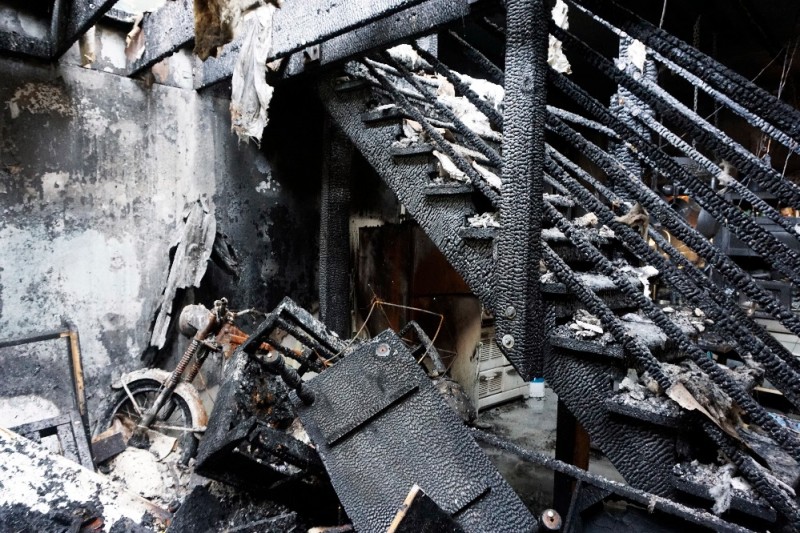
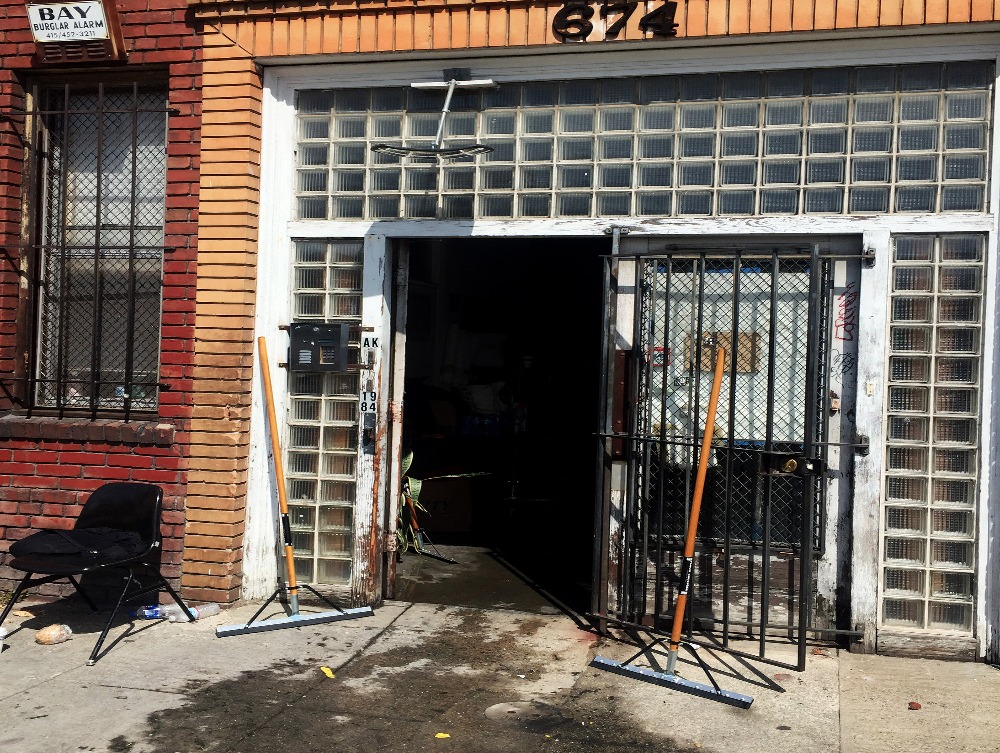
From AK Press: In the early morning of March 21, the building behind ours caught fire. Two people lost their lives. The fire  moved to the mixed-use warehouse building we share with 1984 Printing and 30+ residents. Everyone in our building got out safely, but several units were completely destroyed. There was extensive water and smoke damage to other units, including the ones occupied by AK Press and 1984 Printing.

On the afternoon of March 24th, the City of Oakland red-tagged our building, which prohibits us from occupying it. We don't know how long this will last, but it obviously means we can't conduct business as usual.

We know how many of you support what AK Press does and the important role it plays in independent and radical publishing. A lot of you have been asking what is the best way to help us in the midst of this chaos and disruption. In fact, the outpouring of support and mutual aid has been pretty damn amazing. There was a small army of people here helping with clean-up over the weekend, and we've already raised some emergency funds from generous donations via PayPal (thank you!!) while we were working out the logistics of coordinating a larger fund drive.

But we and our neighbors can all still use help, and we want to make sure everyone affected benefits from the same kind of mutual aid we have seen. In our case, while we have lost thousands of books and pamphlets, our first concern is the smaller presses who we distribute. Several of them had inventory damaged. We want to make sure we are able to pay them so that they can keep going and reprint their books. Second, we are concerned about all the work we are currently unable to do: the books not being shipped out, the files not getting sent to the printer while we are kept out of the building. We are working out the details of our insurance, of what stock is and isn’t covered, but we won't see any insurance money for quite a while and we’ll definitely need some support until that happens, and to make sure our losses aren't passed on to other publishers we distribute.

Our neighbors at 1984 Printing had a ton of paper, materials, jobs in progress, and computers damaged. Residents of the building lost varying percentages of their belongings. Some lost everything.

So, if you can help, it’s pretty simple: whatever you donate will be evenly split three ways between AK Press, 1984 Printing, and our affected neighbors.

And all of us will be very, very grateful.

Solidarity,
The AK Press Collective


UPDATE #1
It's been almost two weeks since the fire at our warehouse and we know some of you have been waiting for an update and wondering how you can plug into the relief efforts. Very briefly, here is where things stand: our building is still red-tagged by the City of Oakland. We are hopeful that, after more inspections and some repairs are completed, we'll be able to stay. In the meantime we have been able to get some access to our stock and so we have been able to send out orders for titles that weren't damaged. We are still waiting for insurance inspectors to come and review the damage in our unit, and until that happens, we can't make any more progress with clearing out destroyed stock. So at this point there is just a lot of waiting, which we can't do much about, and it means it's going to be a while still before our work can return to any semblance of "normal."

We can't thank you enough for all of the support we've gotten in the last two weeks. Your generous donations to our crowdfunding campaign add up to almost $45,000 so far, and that money will be shared with 1984 Printing and our neighbors in the building who have been displaced by the fire. We plan to give out the first round of checks this week. We're not quite to one-third of our goal, so if you can still donate, please do! Recovering from the fire is going to be a long and difficult process, and your support will help us all get back on our feet sooner.

Besides donating, here are a few things folks can do to help (since some of you have been asking!):
• Spread the word about our fundraiser, even if you can't give yourself.
• Organize a benefit. Maybe you're in a band; maybe you can organize a film screening or a house party. Make it a benefit for our fire relief fund and we'll happily share it on our events calendar. Please understand that we are stretched pretty thin labor-wise at the moment so we probably can't send a collective member to your event, but we'll be ever-so-grateful for your help!
• Bookstores and other retailers: this might be obvious, but if you owe us money, now would be a great time to pay up! We've also heard from stores that want to have benefit events or donate a percentage of a day's sales to our fund, which is amazing and we certainly appreciate the mutual aid!
• And finally, yes, you can still place orders with us! Just understand that there will be slight delays shipping things out, so we appreciate your patience. If you're into this sort of thing, we suggest ordering e-books (which require almost no work to process and you can download instantly). And if you're able to support us more consistently, we would love it if more folks signed up as Friends of AK Press. You can do all of these things at akpress.org.

Thanks again, so much, for your support.
-The AK Press Collective

Saturday, April 4, 2015

Settler colonialism is a structure not an event - woodcut

This is a woodcut I made to illustrate a quote by Patrick Wolfe. Feel free to download and re-use it, or contact me for a high resolution TIFF version.

Wednesday, March 25, 2015

Thomas Moynihan - conscientious objector, Wanganui Detention Barracks 1918

AD1 Box 738/ 10/566 Part 2, Archives New Zealand, Wellington Office
Originally on Flickr. On 21 September 1918, Magistrate J.G.Hewitt released the report of his Magisterial Inquiry into the treatment of conscientious objectors imprisoned at Wanganui Detention Barracks. Believing strict discipline would 'reform' those who objected to military service on socialist or religious grounds, the detention barracks were set up in March 1918. Less than two months later, however, 'NZ Truth' published allegations of mistreatment by guards and the camp's commandant, Lieutenant J.L.Crampton.

As the authority on conscription, Paul Baker, notes, "Prisoners who would not wear the uniform were forcibly dressed… [and] pushed, pulled, kicked, and punched around what Crampton called the 'slaughter yard.' Some were pulled with a rope round the neck, and repeatedly pushed into walls until their faces resembled 'raw steak'.

Concerned about the allegations, Defence Minister James Allen launched a Magisterial enquiry in June. The enquiry collected large amounts of statements from objectors and guards, and found the allegations in the main to be true. "Although it was too carefully administered to leave much evidence" notes Baker, "Hewitt concluded that 'severe punishment' had been used." Yet due the hysteria of the day, in some quarters Crampton's actions were celebrated. The Egmont County Council congratulated him on methods 'no Britisher would object to." Encouraged, Crampton demanded a military court martial, and with the RSA as his council, he was found not guilty of 11 charges of ill-treatment.

Archives New Zealand holds the evidence collected by the Magisterial Inquiry, including full statements, drawings of the location of blood stains, and remarkably, these two photographs of Wanganui inmate and Irish-born objector, Thomas Moynihan, undergoing punishment. Moynihan had refused to drill, so according to his statement, he was stripped, beaten, forcibly put in uniform, and taken to the 'slaughter yard'. A rifle was then tied to his wrist, but as Moynihan refused to hold it, the gun kept slipping down. Guards allegedly smashed it several times against the side of his face "till the blood was streaming down." It was finally attached to his shoulder, and he was pushed, punched and forced around the yard for close to an hour, only stopping to have these photographs taken. In them you can see the string around his wrist, the wall inmates were allegedly pushed into, and shading on the concrete pavement that could possibly be blood. Despite his treatment, Moynihan still refused to co-operate, and apparently had no further trouble from the camp guards after this incident.

Archives Reference: AD1 Box 738/ 10/566 Part 2
archway.archives.govt.nz/ViewFullItem.do?code=22429857

One account of the court martial of Crampton can be found at nzetc.victoria.ac.nz/tm/scholarly/tei-WH1Arma-t1-body-d27...

Saturday, March 14, 2015

Kropotkin’s ideas and the international anarchist movement in the 1920s and 1930s - Vadim Damier

industrialism or rural utopia

From Libcom.org. After the bitter experience of World War I and the Russian Revolution, the global anarchist movement had to rethink its approach to revolutionary change. The application of science and technology to warfare, the "rationalization" of production, the rise of fascism, etc., created conditions not envisaged in Kropotkin's anarchist communist teachings, which were subjected to a thoroughgoing revision. But Kropotkin also had his defenders, who not only insisted on the relevance of his ideas, but also extended his critique of industrial society. Using a wide variety of sources, Vadim Damier examines these debates, which found their culmination in the CNT's 1936 resolution on libertarian communism.

Attachment (PDF)
The Ideas of Kropotkin and the International Anarchist Movement in the 1920s and 1930s.pdf

Wednesday, March 11, 2015

Forced dressing of First World War Conscientious Objectors into uniform

AD1 10/407/3, Archives New Zealand, Wellington Office
This image from Archives New Zealand shows the moment when some of the 14 conscientious objectors aboard the troopship Waitemata were taken up on deck to have their hair cut, and forced into uniforms. In July 1917 the objectors, including Mark Briggs and Archibald Baxter, had been smuggled out of Terrace Gaol in Wellington under secrecy, placed into a bare 22- by 10-foot (6.7- by 3-metre) cabin, and shipped to the Western Front. Briggs, a socialist, resisted the cutting of his hair and had to be dragged ‘his heels rattling and bumping on the stairs first going up, then coming down.’ He managed to jerk his head around to resist the hair-cutting, so his cropped hair became covered with red marks from his own blood.

More about Briggs and the 14 can be found at http://www.nzhistory.net.nz/media/video/mark-briggs-great-war-story.

Saturday, March 7, 2015

Towards an anti-colonial anarchism - Vanessa Morgan


Reposted from https://unsettlingamerica.wordpress.com/2015/02/25/towards-an-anti-colonial-anarchism/. Despite some of the difficult language this is a nice wee post.
Unnamed anarchist from Europe [interviewer]: Particularly in Canada, the term “First Nations” is frequently used to describe Indigenous societies. This tends to confuse radical Europeans who consider all references to “nations” as necessarily conservative. Can you shed some light on the Indigenous usage of the term?

Taiaike Alfred from the Mohawk Nation of Kahnawá:ke [interviewee]: Europeans should not transpose their experience with nationhood on others. I myself do not think the term accurately describes our people – only our own languages and words can do that – but it is useful in a sense; it conveys an equality of status in theory between our societies and that of the colonizer. And it reiterates the fact of our prior occupancy of this continent (Alfred, 2010).
The languages that we speak build walls. The English language, for instance, is noun-based, territorial and possessive by nature. Behind this language, however, is a distinct way of relating – one that is exemplified by the interview excerpt above. Sharing a language does not imply consensus or commonality. In this case, although Taiake Alfred does not agree in full with the term ‘First Nations’, he does differentiate First Nation and Indigenous Nationhood from European, Westphalia conceptions of nation-state. He dually describes why, from his perspective as a member of the Mohawk Nation from Kahnawá:ke, this terminology resists Eurocentric impositions of governance but also responds to colonial power-imbalances. Social movements, especially in North America, often fall carelessly into colonial traps of Eurocentric thought and colonial universalism, as exampled above[1]. On the surface, though, it is clear why anarchist movements and anarchic theory may be attracted to anti-colonial struggles.

Opposition to the state and to capitalism, to domination and to oppression, are at the core of anarchist and autonomous movements; they are also at the core of anti-colonial struggles that see the state, and by mutual extension the capitalist system, as de-legitimate institutions of authority that ‘Other’ and colonize by way of white supremacist notions of cultural hegemony (see Fanon, 1967; Smith, 2006). Anarchist movements, however, often fail to account for the multiple layers of power that are at play, both contemporarily and historically. As Barker (2012) critically contends, many of the Occupy sites, for example, recolonized by uncritically occupying already occupied lands. The settler privilege of autonomous organizers within these movements upheld hegemonic/colonial territoriality. Romanticized for stewardship and place-based relations to land, Indigenous peoples have even been idolized as the ‘original’ anarchist societies (Barker & Pickerill, 2012). Indigenous Nationhood Movements actively seek to rebuild nation-to-nation relations with settlers by re-empowering Indigenous self-determination and traditional governments (Indigenous Nationhood Movement, 2015). Nation-to-nation, though, cannot be taken in its settler colonial form; indeed, this assumption concerning a homogenous form of government was, and is, at the core of colonialism: “modern government…the European believed, was based upon principles true in every country. Its strengths lay in its universalism” (Mitchell, 2002: 54). Respecting Indigenous Nationhood as a culturally, politically, and spiritually distinct movement propelled by and for Indigenous peoples is integral. Reasons for and tactics in support of these movements may vary, however they inevitably overlap in many offensives with anarchist anti-authoritarian agendas.

With Eurocentric understandings of an anti-colonial anarchism at the core of many activist oriented renditions of such thinking, activists and scholars alike have heeded words of advice to those amidst struggles against colonial forces in settler colonial contexts. As stated by Harsha Walia in discussing autonomy and cross-cultural, colonial-based struggle:

“Non-natives must recognize our own role in perpetuating colonialism within our solidarity efforts. We can actively counter this by… discussing the nuanced issues of solidarity, leadership, strategy and analysis – not in abstraction, but within our real and informed and sustained relationships with Indigenous peoples.” (2012)

By respecting difference, even spatializing autonomy, settler peoples would do well to not transplant – to settle – their perceptions of autonomy, of solidarity, of leadership, and of strategy onto Indigenous movements. Alternatively in settler colonial contexts, anarchist struggles against colonial authority, and thus capitalistic systems, invariably require respectful engagement with Indigenous movements. This is integral if re-colonizing tendencies of anarchist movements–oftentimes primarily driven by European settlers–are to be prevented. Anarchist actors, especially when operating in settler colonial spaces, must understand the nuances of place specific histories and colonial processes. As Lasky suggests, there is “potential for directly relating to each other and changing our relationships with each other in ways that withdraw consent from ‘the system’ and re-creates alternatives that empower our collective personhoods now” (2011: np). As Alfred mentions however, Eurocentric tendencies have oftentimes perpetuated colonial relations of power. As a result, the very structures of oppression that anarchic thought starkly opposes, but also stemmed from, creep into relational geographies.

By , Intercontinental Cry 

References
Alfred, T. (2010). Interview with Gerald Taiaiake Alfred about Anarchism and Indigenism in North America. Retrieved from http://www.alpineanarchist.org/r_i_indigenism_english.html
Barker, A. (2012). Already Occupied: Indigenous Peoples, Settler Colonialism and the Occupy Movements in North America. Social Movement Studies, 11(3-4), 327–334. doi:10.1080/14742837.2012.708922
Barker, A. J., & Pickerill, J. (2012). Radicalizing Relationships To and Through Shared Geographies: Why Anarchists Need to Understand Indigenous Connections to Land and Place. Antipode, 44(5), 1705–1725. doi:10.1111/j.1467-8330.2012.01031.x
Fanon, F. (1967). Black skin, white masks. New York, NY: Grove Press.
Indigenous Nationhood Movement. (2015). About. Retrieved from http://nationsrising.org/about/
Lewis, A. (2012). Decolonizing anarchism: Expanding Anarcha-Indigenism in theory and practice (Masters thesis). Queen’s University, Kingston, ON. Retrieved from http://qspace.library.queensu.ca/bitstream/1974/7563/1/Lewis_Adam_G_201209_MA.pdf
Mitchell, T. (2002). Rule of experts: Egypt, techno-politics, modernity. Berkley, CA: University of California Press.
Smith, A. (2006). Heteropatriarchy and the three pillars of white supremacy. In Incite! (Ed.), The colour of violence: The INCITE! anthology (pp. 66–73). Cambridge, UK: South End Press.
Walia, H. (2012). Decolonizing together: Moving beyond a politics of solidarity toward a practice of decolonization. Briar Patch, January/February. Retrieved from http://briarpatchmagazine.com/articles/view/decolonizing-together
[1] Adam (Lewis, 2012) explores this topic in depth.