Pages

Thursday, November 17, 2011

occupied wall street poster journal


A handful of crew in NYC (including Justseeds and Occuprint) have been hard at work on an all poster edition of the Occupied Wall Street Journal, the paper that was produced by those occupying Wall Street. I was lucky enough to be approached by Josh MacPhee and get my poster, Never in History, into the mix.

Imagine my surprise when I saw the picture of the Occupy Wall Street Library, with my poster, smack bang in the middle.

I'm stoked people are seeing it (around 20,000 copies were printed) and that of all places, it made it onto the canvas walls of the people's library. I should note that I would never have made the poster if it wasn't for the good folk at Kotare Trust commissioning me to do so.

Tuesday, November 8, 2011

IAS Grant: Philip Josephs and early anarchism in New Zealand


The Institute for Anarchist Studies (IAS) is an American-based organisation designed to foster the development of anarchism, primarily through grants but also through their journal, Perspectives. From their website:
Since the inception of the Institute for Anarchist Studies in 1996, the grant program has been a central project. By awarding grants to radical writers and translators around the world -- many of whom work without the support of academic institutions, and are connected in important ways to the movements about which and for which they write -- the IAS has tried to support the development of the theoretical tools necessary for critiquing the systems of domination in which we are enmeshed as well as proliferating resistances and alternatives to these systems in order to maximize freedom, justice, and dignity.
A few months ago I thought I would have a crack at submitting an application for the latest round of funding. I'm currently researching Philip Josephs (founder of New Zealand's first anarchist collective) and early anarchism in New Zealand, so I knew a grant of any kind would really help with travel/research costs.

I thought I may have a slim chance, as Mark Derby is the only other New Zealander to win a grant so far. But when I received an email saying that I had won a grant for $750 USD from the IAS towards this project I was pretty damn surprised! This much-needed financial boost will help me employ a researcher at the International Institute of Social History in Amsterdam, where the complete archive of the UK Freedom Group is held. It will also get me to the National Archives in Wellington, a trip that I usually can't justify due to the costs involved. In return the IAS gets an article on anarchism in New Zealand for their journal, as does New Zealand labour historiography.

Thanks to the IAS for this amazing award, and to everyone who has helped me along the way—both with my Joe Hill research and my current project. Hopefully I can do Philip and the anarchist movement justice.

I'll be posting updates and bits from my research from time to time on my blog if anyone is interested: http://www.garagecollective.blogspot.com/

Sunday, November 6, 2011

Subtle subversions: Polish film posters


Justseeds bloggers recently pointed out this great website of Polish film posters from the 1940's onwards. As well as being visually striking, a number of these posters contain subtle political overtones—film posters escaping the eyes of the Soviet censors. It was a format that allowed Polish designers to critique Soviet rule in a mainstream context.

An excellent book on this process is Western Amerykanski: Polish Poster Art and the Western, which looks at how the Western genre enabled poster artists to comment on Russian Imperialism and other taboo subjects.

Friday, November 4, 2011

Celebrate Resistance: Katipo Books November Update

“This type of historical awareness is a key reminder that we still live in a society deeply divided by class. The actions of the past stand as inspiring, yet unfinished movements to continue to build upon and to adapt to present conditions.” (Nicholas Lampert, Realising the Impossible).
With occupations and general strikes taking place around the world, what better time to read up on some ideas to help further the struggle. We can learn from those who have walked similar paths before us—their methods and tactics, successes and failures. And we can be inspired to push our actions further.

Here's a few titles that we hope may be relevant:

Lucy Parsons: Freedom, Equality & Solidarity – Writings & Speeches, 1878-1937
For anarchist Lucy Parsons, a general strike and an occupation are synonyms.
Her amazing speech can be read here. Other elements of her talks resonate greatly with the present moment. Parsons discusses her experiences with the police and state murder of her husband, sadly relevant to recent police violence. Parsons talks about how U.S. residents drew inspiration from struggles around the world, another parallel to the present where protests around the world look to each other for ideas and motivation. Parsons also discusses gender divisions within movements of her day, issues which we still need to address today.
Read more here.
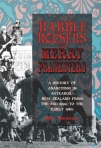
Rabble Rousers & Merry Pranksters: A History of Anarchism in Aotearoa/New Zealand from the Mid-1950s to the Early 1980s
Rabble Rousers and Merry Pranksters captures some of the imagination, the audacity, the laughs and the wildness that animated many of the social movements of the sixties and seventies in Aoteaora/New Zealand. During this time, particularly from the late sixties to the early seventies, an astonishingly broad-based revolt occurred throughout the country. Thousands of workers, Maori, Pacific people, women, youth, lesbians, gays, students, environmentalists and others rebelled against authority. Innovative new styles and anarchistic methods of political dissent became popular.
Read more here.

We Are Everywhere: The Irresistible Rise of Global Anti-Capitalism
7″ 5″, b&w photo-studded tour of the global justice movement’s many locales and leaderless actors, from a mostly London-based editorial collective that includes an editor of New Internationalist magazine. The book is divided into seven primer-like chapters-”Emergence,” “Networks,” “Autonomy,” “Carnival,” “Clandestinity,” “Power” and “Walking”-each with a headline-like subtitle (e.g., “Power: building it without taking it”). The book as a whole makes a case for “direct action,” or organized resistance to specific policies or decisions
Read more here
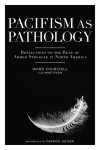
Pacifism as Pathology: Reflections on the Role of Armed Struggle in North America (2nd edition)
Pacifism as Pathology was written as a response not only to Churchill’s frustration with his own activist experience, but also to a debate raging in the activist and academic communities. He argues that pacifism is in many ways counterrevolutionary; that it defends the status quo, rather than leading to social change. In these times of upheaval and global protest, this is a vital and extremely relevant book.
Read more here
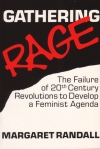
Gathering Rage: The Failure Of 20th Century Revolutions To Develop A Feminist Agenda
In Gathering Rage, writer, poet,and activist Margaret Randall describes how two of these revolutions, in Nicaragua and Cuba, addressed or failed to address a feminist agenda. Writing as both observer and participant, Randall vividly describes how in each case, to varying degrees and in different ways, women’s issues were gradually pushed aside. Combining anecdotes with analysis, she shows how distorted visions of liberation and shortcomings in practice left a legacy that not only shortchanged women but undermined the revolutionary project itself.
Read more here

The Essential Rosa Luxemburg
This new, authoritative introduction to Rosa Luxemburg’s two most important works presents the full text of Reform or Revolution and The Mass Strike, with explanatory notes, appendices, and introductions.

One of the most important Marxist thinkers and leaders of the twentieth century, Rosa Luxemburg is finding renewed interest among a new generation of activists and critics of global capitalism.
Read more here
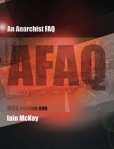
An Anarchist FAQ
The bible of anarchism! This exhaustive volume, the first of two, seeks to provide answers for the curious and critical about anarchist theory, history, and practice. More a reference volume than a primer, An Anarchist FAQ eschews curt answers and engages with questions in a thorough, matter-of-fact style.

Having been an internet staple for over a decade, we are proud to offer this solicitously edited print version. AFAQ’s oversized and affordable format (topping out at over 700 pages) will ensure it a place on every shelf, where it will be referenced again and again.
Read more here

How the Rich Are Destroying the Earth
Bringing to bear more than twenty years of experience as an environmental journalist, Kempf describes the invincibility that many of the world’s wealthy feel in the face of global warming, and how their unchecked privilege is thwarting action on the single most vexing problem facing our world.

In this important primer on the link between global ecology and the global economy, Kempf makes the following observations: First, that the planet’s ecological situation is growing ever worse, despite the efforts of millions of engaged citizens around the world. And second, despite environmentalists’ emphasis that “we’re all in the same boat,” the world’s economic elites—who continue to benefit by plundering the environment—have access to “lifeboats” that insulate them from the resulting catastrophes.
Read more here

This Friday we will be ordering new books from AK Press (once they're back from the Oakland General Strike!), so stay tuned for some new material over the next month or so. Also, Justseeds posters are back on the site for your viewing pleasure.
In Solidarity,
Katipo Books Workers' Co-Operative

Monday, October 31, 2011

Past to Present: Lessons of the New Zealand Labour Movement (video of Occupy workshop)


'Past to Present: Lessons of the New Zealand Labour Movement' was a workshop I gave at Occupy Christchurch.

Due to the massive scope of the topic I limited my focus to major union struggles, but this should not be taken that I believe the union movement is the working class movement in New Zealand. There are so many struggles outside and against the unions that could also be talked about, but time did not permit this.

0.00 to 31.00 gives an overview of union struggles in New Zealand, and draws out lessons that could inform our future activity. Comments and responses follow, and includes talk about the nature of capital, general strikes, Occupy and the workers movement, co-operatives, and whether one can escape capitalism.

There were about 15-20 in the workshop, with people coming and going on the periphery as well. There was lots of nodding, which I guess is a good sign, and I hope this perspective has contributed to the analysis happening down at Christchurch Occupy.

Friday, October 28, 2011

The General Strike: The Strike of the Future, by Lucy Parsons


From RecompositionThis is a speech given by the famous anarchist Lucy Parsons. This excerpt in particular is particularly relevant to the Occupy movement and recent discussions of a general strike:


“Nature has (…) placed in this earth all the material of wealth that is necessary to make men and women happy. (…) We simply lack the intelligence to take possession of that which we have produced. (…) My conception of the future method of taking possession of this is that of the general strike: that is my conception of it. The trouble with all the strikes in the past has been this: the workingmen like the teamsters in our cities, these hard-working teamsters, strike and go out and starve. Their children starve. Their wives get discouraged. (…) That is the way with the strikes in the past. My conception of the strike of the future is not to strike and go out and starve, but to strike and remain in and take possession of the necessary property of production.”

For Parsons, a general strike and an occupation are synonyms. 

The rest of the speech can be read here. Other elements resonate greatly with the present moment. Parsons discusses her experiences with the police and state murder of her husband, sadly relevant to recent police violence. Parsons talks about how U.S. residents drew inspiration from struggles around the world, another parallel to the present where protests around the world look to each other for ideas and motivation. Parsons also discusses gender divisions within movements of her day, issues which we still need to address today.


Thursday, October 27, 2011

PDF Zine of libcom's introductions on capitalism, class, and class struggle


http://libcom.org/library/capitalism-class-class-struggle-ex-dummies

I've just finished designing a downloadable, ready-to-print PDF adapted from libcom.org's introductions to capitalism, class, and class struggle.* Includes graphics (the prole pyramid is the centerfold). Hope that it may be of some use.

*a section on unwaged work has been added.

Monday, October 24, 2011

An Occupation or Just a Gathering?


From Libcom.org: The “Occupy Wall St.” model has done what many have tried and failed, it has pushed past the apathy and created a venue for possibility. In cities and towns across the country people are finding one another in situations few ever dared to venture into before. Meetings are being held, food shared and ideas discussed. But as one participant put it - “The fuzzy ultra-left ideal about forging new kinds of relationships through struggle and finding each other and such can’t just be about meeting in space and time, otherwise we could start a bowling league and be done with it.” What the gatherings themselves lack is a coherent substance, a sense of self-understanding. Towards this end, we raise the following questions.

An Occupation or Just a Gathering?
The term occupation is often associated with a few things, namely the idea of disruption of or interference with the flow of goods or capital. When you ask for permission, when you seek a permit, the “occupations” become ‘camping’ and the term becomes a catch phrase.

The original encampment, which has spawned many franchises in it’s wake, has been likened to other movements from around the globe, most notably the Tahrir Square occupations this past January. The major differences between the movement currently emerging in the US and those of the square occupations throughout Northern Africa and Europe is strength. It was not merely the fact that 50,000 people took over Tahrir Square, it was the fact that they would not be forced to leave that made the difference. As a movement they were ready to physically defend the areas they had liberated and attack those trying to destroy it. By deciding on a strategy of “non-violence,”we have cut our legs out from under ourselves. They do not hold Zuccoti park, it is given to them under police supervision, and will be taken away just as easily when the moment is deemed appropriate, i.e. when the police and the mayor have had enough.

When the Occupy Wall St. protestors took their message outside of the NYPD contained area they were attacked. Over 80 arrests occurred when the crowd marched near Union Square. When they tried to cross the Brooklyn Bridge hundreds were detained and received citations. While the numbers swelled after those attacks, we missed a chance to sway the balance of power for just a moment.
That could change if the parameters of conflict were widened, if new avenues were opened to the possibility of physically holding space, not negotiating for it’s rental. Our individual refusals are small but collectively it is one of the last and strongest weapons we can wield together.

Are we Anti Capitalists or just Anti Corporations?
There is a difference between being an anti-capitalist and being against corporations, or “corporate greed” as some have chosen to describe it. Anti-capitalists reach for a world free of the kinds of social relationships that require domination. Landlords and tenants; bosses and workers; police and prisoners. These are relationships inherent to a capitalist system and to the democracy we live under. It is not indicative of a “broken” system for unemployment rates to soar, inflation to reign and wages to continually drop. The money can not even out, congress can not legislate it’s way to equality. From where we all sit now, our personal freedoms and any wealth we can accumulate is done on the backs of someone else or at our own expense.

Though it may have acquired new forms, none of the poverty or exploitation we are protesting is unique to our modern age of corporate dominance. Regulating or taxing corporations will not come close to solving these problems, because these institutions are only one part of the vast structure of social relationships called State and Capital.

The future is wretched and marked with the poverty we all feel today. This in and of itself is a cause for indignation. When that rage turns towards petitioning congress for a brighter tomorrow or demanding accountability of corporations, we have already lost.

The Police are not our friends!
Capitalism, as a system, is based on a series of relationships between those who have power and those who do not. The police, whether they are a beat cop, a detective or the Chief act as the enforcers of this economic system. They stand between us and the food we need to survive. They evict us from the homes we can no longer afford. Their job is to enforce the laws of capital, the ones created not to keep us safe but to protect capital and ensure the system works as smoothly as it can.
The police who enter our liberated zones, our occupations, are doing so as agents of the State. As individuals they may have families and problems. They may hate their jobs just like the rest of us, but that does not mean they will not do them. If we are to stand together as the proposed 99% we can not allow the thugs and mercenaries of the 1% to pierce our spaces.

Download 'Wobblies Down Under'

Wobblies Down Under

The Swedish-American radical socialist, songster and poet Joe Hill, became a martyr for the working classes world-wide when he was executed in 1915 for a murder he almost certainly did not commit. His ashes were distributed around the world including New Zealand but no trace of them has ever been found here. Researcher Jared Davidson set out to track them down but in the process uncovered the story of the Industrial Workers of the World (IWW, known as the 'Wobblies') and their repression in New Zealand during the early 1900s and World War 1. (47′06″)
Download: Ogg Vorbis  MP3 | Embed